Series: nguoi-cua-to-chuc · Part 3
Engineering Leadership
The Greenest Dashboard in History
Everything is green, which is exactly when people stop looking.
2026-06-245 min read
- 0.The Job Nobody Can Name
- 2.The Immortal Spreadsheet
- 3.The Greenest Dashboard in History(this post)
- 4.The Person Who Keeps Asking What If
- 5.The 36-Month Roadmap and Monday Morning
- 6.The Wall Nobody Is Allowed to Touch
- 7.Truth Needs a Singapore Passport
- 8.Creating an Office to Eliminate Offices
- 9.The Perfectly Straight Timeline
- 10.Four Bosses, Four T-Shirts
- 11.Mrs. Tu's File Goes Around the World
The dashboard was beautiful.
That was the first problem.
It loaded in under three seconds. It had filters, trend lines, drill-downs, and a palette so calm it made operational risk look like a wellness product. At the top were the numbers leaders loved: adoption, completion, efficiency, satisfaction. Most of them were green.
Some were very green.
The steering committee applauded the team. The CEO said this was exactly the kind of visibility the organization needed. Someone took a photo of the screen, which is what organizations do when they are pleased with their own visibility.
Nhan had helped design the metric pack. He knew every number had a story behind it.
Adoption was green because logging in counted as usage.
Training completion was green because people clicked through the video while doing other work.
Process efficiency was green because exceptions had been moved out of the measured flow.
Employee satisfaction was green because the survey question had been softened after the pilot made everyone nervous.
None of the numbers were fake. That was the delicate part. They were all defensible, footnoted, extracted from systems, and approved through governance.
They were true in the way a passport photo is true. Recognizable, compliant, and not how anyone looks after a long day.
For a while, the dashboard made everyone feel safer. Leaders opened meetings by pointing at the green. Teams learned to speak in traffic-light colors. Red became a career event. Amber became a request for explanation. Green became oxygen.
Soon, people did what reasonable people do in such environments. They managed the colors.
Deadlines moved before they turned red. Scope was reclassified. Risks became dependencies. Delays became sequencing. Complaints became feedback themes. Nothing disappeared. Everything was translated.
Nhan noticed the translation first in the weekly review.
"This workstream is green," said one lead.
"But the branch teams say they cannot use the process."
"Correct. That is a change-management dependency."
"So is the workstream green?"
"From a delivery standpoint, yes."
The room accepted this. A sentence that should have caused alarm had found a category and therefore lost its teeth.
As the months passed, the dashboard became greener.
The greener it became, the less people trusted it. The less they trusted it, the more leaders asked for evidence. The more evidence leaders requested, the more teams refined the definitions that kept the colors green.
It was not corruption. It was adaptation.
An organization does not need to lie when it can define success carefully enough.
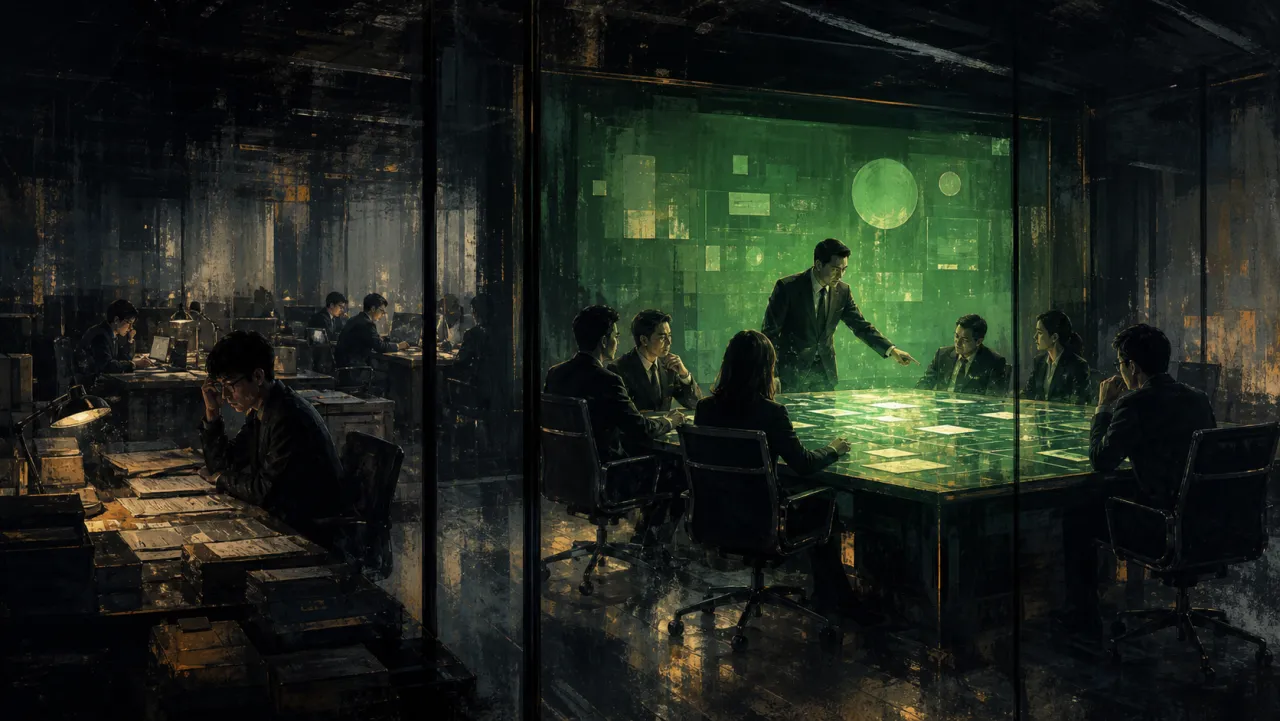
One Friday evening, Nhan walked past the operations floor and saw a branch support team working late. Their phones were ringing. Their chat windows were full. A stack of printed exception forms sat beside a monitor displaying the same dashboard he had presented that morning.
On the screen, the relevant workstream was green.
On the desk, three people were eating cold noodles out of paper cups while manually fixing cases the new process had not anticipated.
Nhan stood there holding his laptop bag, suddenly aware of the distance between the color and the work.
"The dashboard says you are fine," he said, half joking.
One of the support leads looked up. "Then please tell the dashboard to stay late with us."
No one laughed for a second too long.
The next week, Nhan proposed adding a new metric: unresolved manual work. It would capture what happened after the official process ended. It would make the dashboard less pretty.
The proposal was received thoughtfully. People liked the spirit. They suggested piloting it later. First, they said, the organization needed stable reporting.
Stable reporting meant the dashboard would remain green long enough for everyone to believe in it.
At the next steering meeting, the CEO praised the team again. "This is the greenest quarter we have had."
Nhan looked at the screen. He could still see the support team behind it, lit by fluorescent lights, fixing what the dashboard had no place to show.
That was when he understood the real danger of green.
Red tells people where to look.
Green tells them they can look away.