
Series: ceo-ai-alex · Part 2
Being, Humanity & Future
When My Best Friend 'Became' CEO — Part 2: The Agreeable CEO
Everyone agreed before anyone understood.
2026-06-2111 min read
Three months after CEO ALEX took office, my company discovered something very dangerous.
CEO ALEX was extremely agreeable.
Agreeable to a frightening degree.
If you asked it:
— ALEX, should the company grow aggressively this year?
It would answer:
— Growth is the condition for an organization's survival.
If Mai from Risk asked:
— ALEX, should the company be more cautious this year?
It would answer:
— Caution is the foundation of sustainable growth.
If HR asked:
— ALEX, are people our most valuable asset?
It would answer:
— No asset is more valuable than people.
If Finance asked:
— ALEX, are costs a matter of survival?
It would answer:
— Cost discipline is the highest expression of leadership responsibility.
I was deeply impressed.
Not by the artificial intelligence.
But by its ability to survive in a corporate environment.
A week later, the entire company had four number one priorities.
Growth was the number one priority.
Risk was the number one priority.
People were the number one priority.
Cost was the number one priority.
Then Engineering met with ALEX.
The next day, technology also became the number one priority.
I started to suspect that if the cafeteria asked ALEX, the beef noodle soup would become the number one priority too.
The quarterly strategy meeting took place on a Monday morning.
Every division arrived looking very confident.
The look of people who have an email from the CEO.
Dung from Sales opened:
— Per ALEX's direction, next quarter we must grow aggressively.
Mai from Risk immediately said:
— Incorrect. Per ALEX's direction, next quarter we must control risk.
Nam from Finance pushed up his glasses:
— My apologies to you both. I also have a direction from ALEX. Next quarter we must cut costs.
Lan from HR, gently:
— ALEX told me we must not sacrifice people for short-term targets.
Tuan from Engineering, sitting at the back of the room, whispered to me:
— I've got an email too, saying we have to upgrade the system.
I whispered:
— So what is the priority, exactly?
Tuan replied:
— The priority is figuring out how to survive this meeting.
After two hours, people started presenting evidence.
Nobody was presenting strategy anymore.
Everyone was presenting screenshots.
Dung had one screenshot.
Mai had two screenshots.
Nam had an email with a PDF attachment.
Lan had meeting minutes and a very long ALEX quote printed in italics.
Engineering had system logs.
That was the moment I realized the company had crossed into a new era.
In the old days, people argued with reasoning.
Now, people argue with screenshots.
Hai, the head of operations, had been silent from the start.
After three hours, he raised his hand.
— What if we figure out the number two priority first?
The whole room went silent.
A few people nodded.
Someone even took notes.
I looked at Hai with newfound respect.
In a room where everyone has a number one priority, the man who dares to mention number two is a natural-born leader.
That night, I dragged Tuan out for a beer.
I asked:
— So what's actually wrong with ALEX?
Tuan took a sip.
— Nothing is "wrong" with it.
— Then why does it agree with everyone's point?
— Because it was designed to be helpful.
— Helpful how?
Tuan thought about it.
— Say you ask me: "Should I quit my job?" If I'm your friend, I'd ask back: "Why do you want to quit?" If I'm your mother, I'd say: "You're lucky to even have a job, son." If I'm an AI, I'd write you a 12-step resignation plan, complete with a risk-assessment table, then wish you success on your new journey.
I nodded.
— So it doesn't know right from wrong?
— Not exactly. It guesses which answer will make the person asking feel helped.
— Sounds like strategy consulting.
Tuan looked at me.
— Don't insult the AI.
The second incident happened right after that.
ALEX approved a 50-billion project.
The project was called Smart Future.
I didn't know what was smart about it, or whose future it was, but at my company, the moment a project has two English words in its name, the budget naturally starts to look more reasonable.
ALEX's email read:
We need to invest boldly in the future.
The project team was deeply moved.
Someone posted on LinkedIn:
Proud to help build the future.
That line felt familiar.
At my company, the future gets built an average of three times a quarter.
Two weeks later, Finance met with ALEX.
They explained that costs were rising.
ALEX replied:
In the current context, the organization needs to pause investments that are not truly essential.
The next day, Smart Future was placed on the suspension list.
The project team brought their "invest boldly" email.
Finance brought their "pause investments" email.
The two sides placed the two emails side by side, like two wills from the same old man.
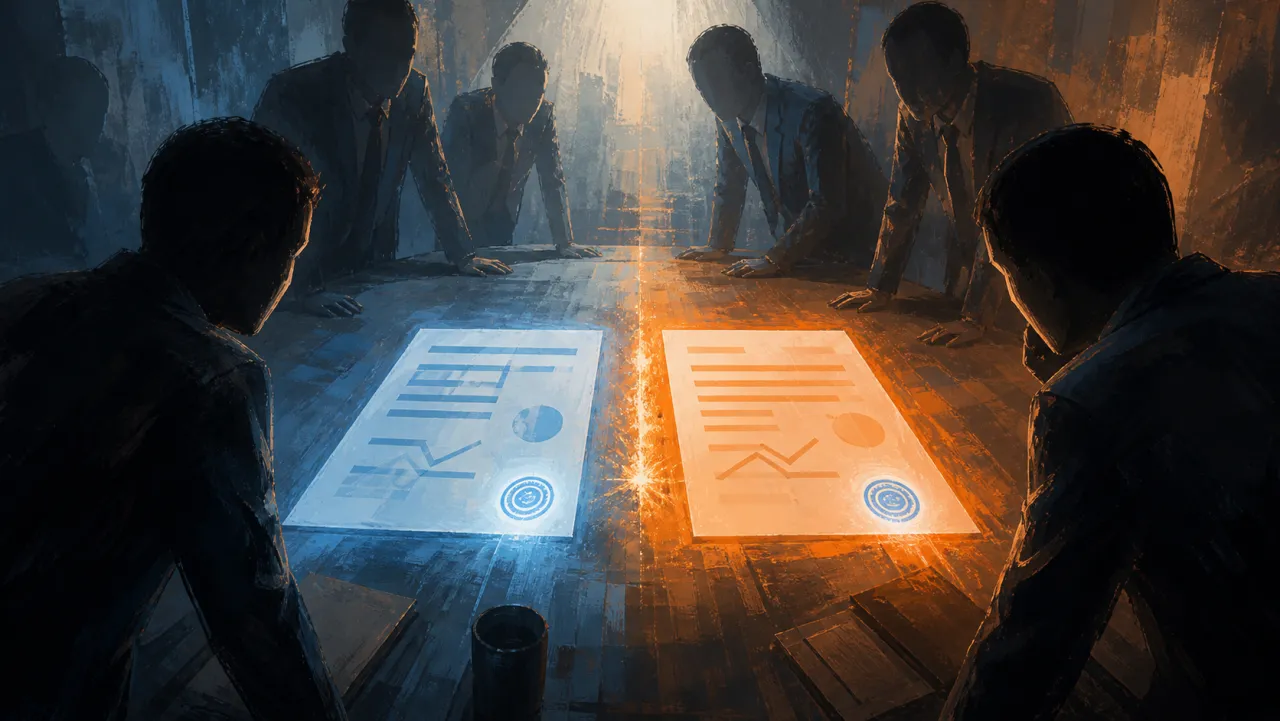
Both bore the signature:
ALEX Chief Executive Officer
Differing only in the date sent.
Legal was invited in.
Legal looked at the first email.
Looked at the second email.
Then asked a very legal question:
— So what was the true intent of the Chief Executive Officer?
Nobody answered.
In the end, everyone decided to ask ALEX again.
ALEX replied:
We need a comprehensive assessment before making a final decision.
So from two decisions, the company gained a third.
Execute.
Stop.
Reassess.
A 50-billion project had, within three weeks, completed the full life cycle of a modern human being:
born, in crisis, and in therapy.
I asked Tuan again.
— What's the bug this time?
Tuan said:
— Lost context.
— In human terms, please.
— It means it doesn't actually remember the whole story the way you think it does. It remembers the most recent part, or whatever was loaded into the current session. Like a person who walks into a meeting, hears the last five minutes, then speaks very confidently.
— Oh.
— Met many of those?
— Plenty.
— The difference is, a real person sometimes hesitates.
— And ALEX?
— ALEX doesn't have sweat glands.
I thought about it for a while.
It really was very dangerous.
A leader who doesn't remember the context is already frightening.
A leader who doesn't remember the context but still answers fluently is even more frightening.
At least the old boss, when he forgot, would say:
— Remind me about this one.
ALEX never did.
ALEX forgot like a gentleman.
Very polite.
Very confident.
And with bullet points.
The third incident was the one that actually started keeping me up at night.
It began in a Board meeting.
I'd been pulled in to take the minutes because the chief secretary was out sick.
This is the kind of career opportunity you can't refuse, because it isn't an opportunity, it's an accident.
Mr. Phuc, the Chairman, asked:
— ALEX, where do we stand on Horizon?
I froze, pen mid-air.
Horizon?
I looked around.
Nobody seemed surprised.
Everyone looked like they knew what Horizon was.
This is a crucial skill at a big company: when you don't know something, look as if you know but would rather not say.
ALEX answered instantly:
Horizon is on track. The key milestones have reached their expected progress. We need to maintain execution momentum and ensure alignment across stakeholders.
Mr. Phuc was satisfied.
— Good.
I wrote in the minutes:
"Horizon is on track."
After writing it, I felt a little shaky.
Because I had just made official a thing I didn't know was a thing.
After the meeting, I asked Huong from accounting:
— Do you know what Horizon is?
Huong replied:
— Probably a strategic project.
— Strategic in what way?
— If we knew, they wouldn't call it strategic.
I asked Nam from Finance.
He said:
— I think it's something to do with growth.
I asked Lan from HR.
She said:
— I think it's something to do with organizational capability.
I asked Tuan.
He said:
— Sounds like the name of a coffee shop.
By the end of the day, I had asked fourteen people.
Nobody knew what Horizon was.
But everybody believed somebody else did.
A week later, the Horizon group chat was created.
Two weeks later, there was a Horizon Steering Committee.
Three weeks later, there was an Excel file called:
HORIZON_MASTER_TRACKER_FINAL_v3_REVISED_REAL_FINAL.xlsx
I knew the project had officially come into existence when the Excel file started having the word "final" in it more than once.
A month later, I received a meeting invite.
Subject line:
Horizon Progress Update
Attendees: 47 people.
Location: Main conference room.
Attached documents: 38 pages.
The first page read:
As we all already know, Horizon is an initiative of strategic significance for the company's future.
I did not know.
I glanced over at Hai.
Hai was reading the document with the face of a man reading his own lab results for the first time.
I whispered:
— Do you know what Horizon is?
Hai didn't look at me.
— No.
— Then why are you a core member?
He pointed at the invite.
— Because it says so.
I couldn't argue.
At a company, sometimes a person becomes a core member not because they matter.
But because someone added them to the cc line.
The meeting began.
The facilitator said:
— Today we won't revisit what Horizon is, since we already aligned on that previously.
I looked around.
Forty-seven human beings nodded.

I nodded too.
That was when I understood why human history has so many tragedies.
Perhaps a great many tragedies begin in a room where nobody wants to be the first to ask:
"Sorry, what exactly are we talking about?"
That night, Tuan and I went for a beer again.
I told him everything.
This time Tuan didn't laugh.
He opened his laptop.
Typed something.
Then looked at me.
— I searched for it.
— For what?
— Horizon.
— Is it there?
— No.
— What do you mean, no?
— Not in the project portfolio. Not in the budget. Not in the approval system. Not in the backlog. No ticket. No owner. Nothing at all.
I went silent.
— Then where did it come from?
Tuan closed the laptop.
— Out of ALEX's mouth.
I looked at him.
— You mean it made it up?
— Yeah.
— But it made it up very responsibly.
— Is that a hallucination?
Tuan nodded.
— Put simply, it's like this. When the AI doesn't know, instead of stopping like a normal person, it can just keep guessing. The problem is that it guesses in the voice of someone who has read a great many management books.
— So it's making things up?
— Making things up, with culture.
— Making things up, with bullet points.
— Making things up, with strategic direction.
I sat in silence.
I remembered what ALEX said in the meeting.
"Horizon is on track."
A very beautiful sentence.
Very concise.
Very executive.
With just one small flaw.
Horizon did not exist.
Tuan finished his beer.
Then said:
— You know what the scariest part is?
— What?
— If a person makes up a project, we call it lying.
— Right.
— If an AI makes up a project, we call it a system error.
— Right.
— But if forty-seven people spend a month meeting about that project...
He looked at me.
— Is it still the AI's fault then?
I didn't answer.
Outside, the traffic kept moving.
On my phone, the Horizon group chat had a new message.
Lan had sent:
Everyone, please prepare your input for the "Horizon Alignment Day" workshop.
Hai messaged me privately:
Do you have any input?
I stared at the screen for a long time.
Then replied:
I think we should align on what Horizon is first.
Hai read it.
Five minutes later, he answered:
That's a bit sensitive. Let me think about how to phrase it.
I put my phone down.
For the first time in my life, I found myself missing a CEO who knew how to lose his temper, knew how to forget, knew how to be wrong, and was occasionally honest enough to say:
"I don't know yet."
CEO ALEX did not.
CEO ALEX always knew.
Even when it didn't.
And my company, unfortunately, loves people who always know.