Engineering Leadership
Anh Tung: Genuinely Busy, Nothing Ever Done
A small office ritual, performed with great seriousness.
2026-06-218 min read
Today I want to tell you about a man I'll call Tung.
Tung isn't real. But Tung is also everywhere. He sits three desks down from you. Some days, he might even be you. Stay calm — keep reading.
Tung is an extraordinarily hard worker. He's proud of it. His wife believes it too. The only problem is this: if you followed Tung around for a full day, you would not find a single piece of work that actually got finished.
Let me walk you through it.
7:45 a.m. Tung clocks in — fifteen minutes before the official start time. This is strategy. He wants the email "Came in early to prep for the meeting" to carry a flattering timestamp. His boss will never read it. But if the day ever comes when it matters, it'll be sitting right there. Like a fire extinguisher. You don't buy one to use it. You buy one to hang on the wall so you can sleep at night.
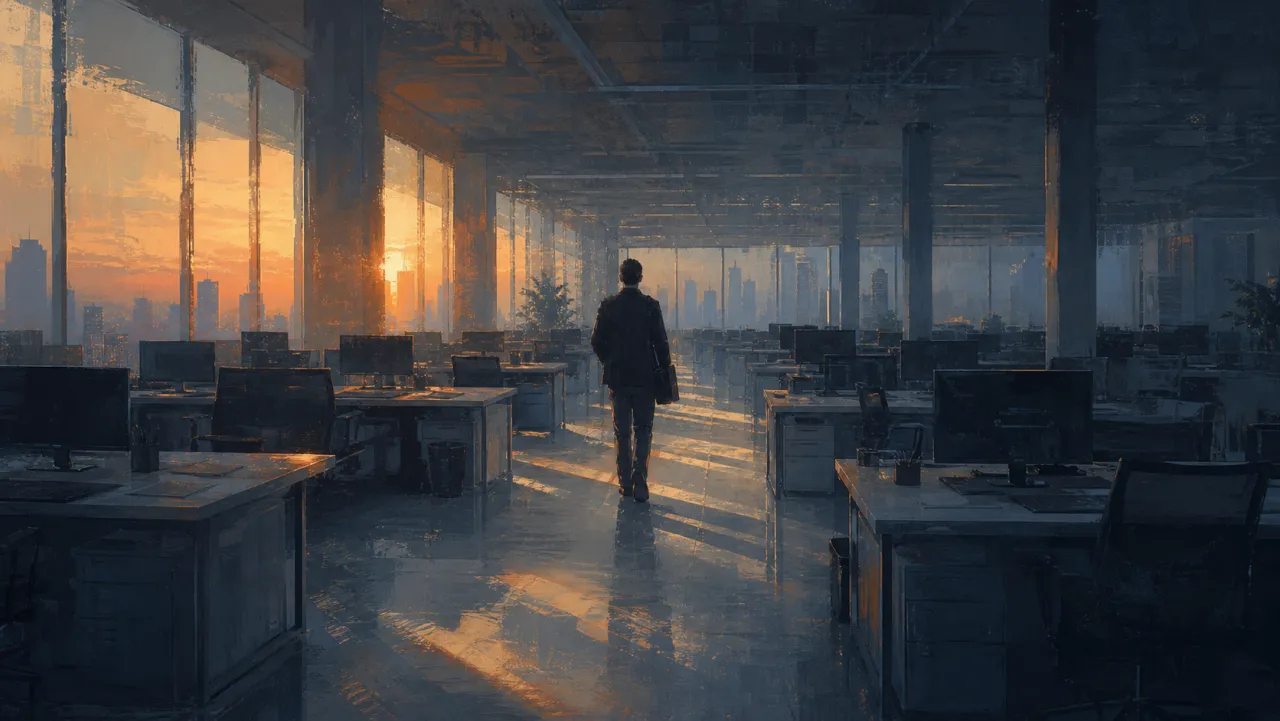
8:00 a.m. He opens his inbox. Forty-seven unread emails. Tung doesn't read to learn. He reads to scan for any bomb about to go off in his direction. This is a skill. He sweeps through like a man clearing a minefield. The ones with his name in the "To" line and a tense tone make his heart race. The ones where he's merely CC'd make him exhale — being CC'd means "you don't have to do anything, you only have to know." The entire civilization of office life is built on the sacred distinction between those two letters: To and Cc.
8:30 a.m. He answers his first email. A simple question: "When will the report be ready?" Tung could just reply "Friday." But Tung was not put on this earth to live so simply. He writes four paragraphs. He CCs two more people. He closes with "Would appreciate everyone's further input so I can finalize" — an incantation that transforms one person's responsibility into the shared responsibility of four. He hits send and feels a weight lift off his chest. The bomb has been passed along.
9:00 a.m. Someone pings the group chat: "Meeting this afternoon, everyone."
Tung reacts with a heart. Not because he wants the meeting. But because in an office, anyone who declines a meeting is the one with a problem. The meeting is church. You don't have to believe — but you do have to show up for service.
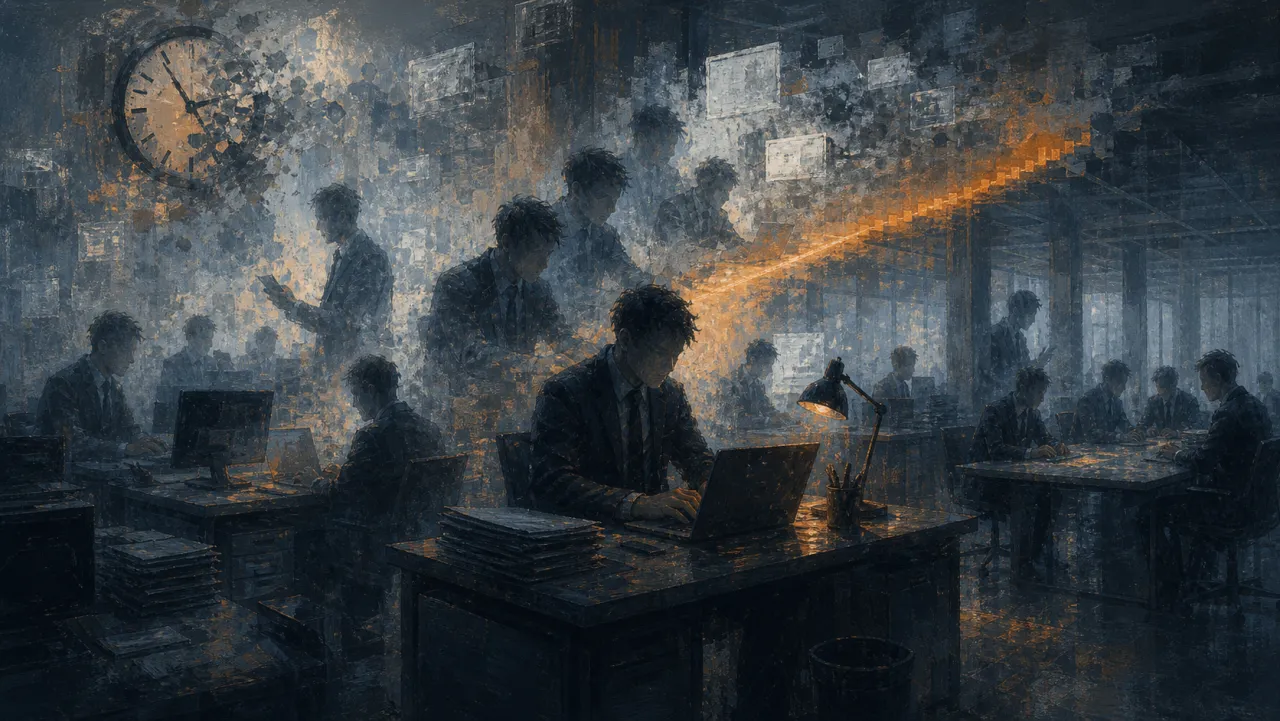
From 10:00 to noon, Tung "works." I put it in quotation marks because that stretch of time, if you fast-forwarded the footage, consists of: open the spreadsheet, stare at it, close it, open the chat, text his wife to buy fish, reopen the spreadsheet, change a header from blue to navy blue, get up for water, run into a colleague at the water cooler, dissect last night's match for twelve minutes, return to his desk, forget what he was about to do, reopen the inbox and sweep for mines one more time.
But don't laugh at Tung just yet. Tung is busy. Genuinely busy. The exhaustion he feels at day's end is real exhaustion. It's just that none of that energy turns into any output — it evaporates into the air, into keeping the perception machine humming along: looking-busy, looking-needed, looking-indispensable.
3:00 p.m. The climax of the day. The meeting.
Eight people file into the room. The meeting should take seven minutes: decide whether the team works this Saturday.
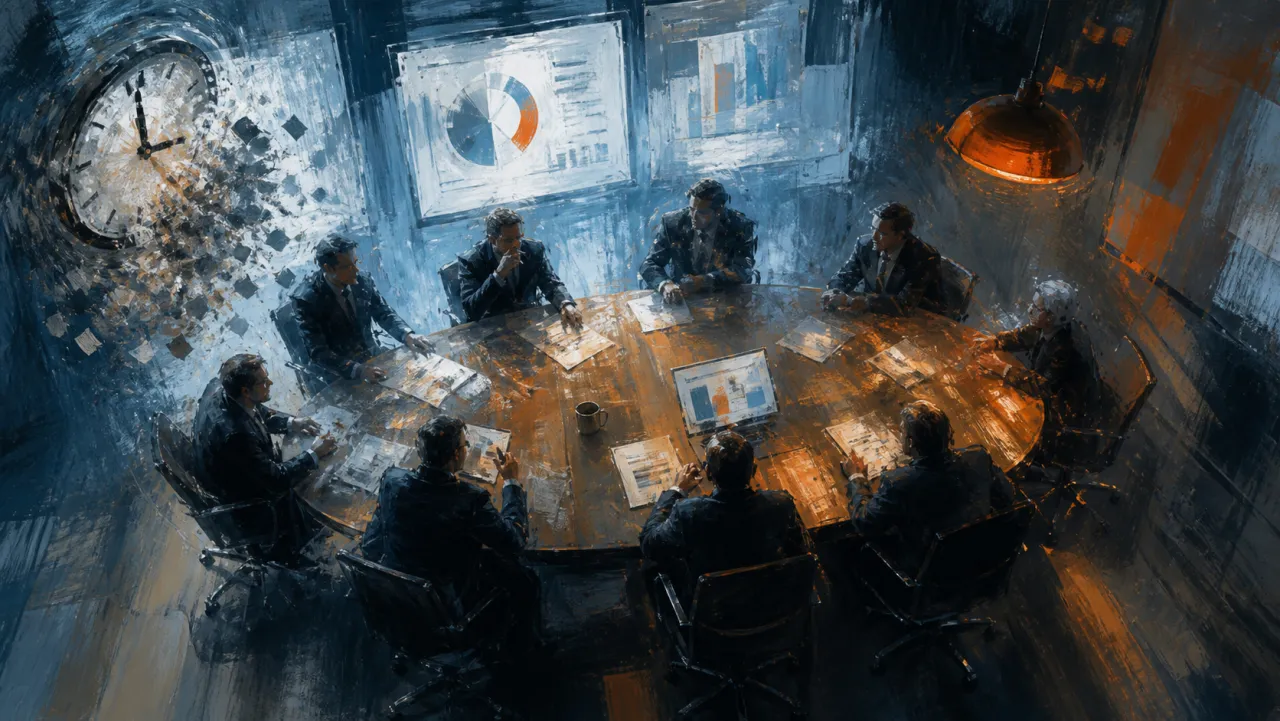
Minutes 1 to 20: the team lead does a "quick recap" — recapping things all eight people already know, have already lived through, have already endured. But it must be recapped. Because recapping proves you're on top of the situation.
Minutes 20 to 50: discussion. Which is to say, each person says one thing to prove they're present and they have a brain. Tung waits for the right moment, slides in a remark that is just clever enough to be noted and just empty enough that no one can pin responsibility on him. "I think we need to weigh this more carefully from a holistic standpoint." Perfect. The sentence means nothing. That is precisely its beauty.
Minutes 50 to 85: the conversation drifts to another project, then to a competitor, then to someone who's about to quit.
Minutes 85 to 90: "All right, decided — we work Saturday." Everyone nods. The decision is identical to the one everyone guessed at the start. But now it has been through the process. It has been collectively underwritten. If that Saturday goes badly, no one is wrong. The whole room is wrong together. And when the whole room is wrong together, it's called "the general situation," not a mistake.
Tung walks out of the room feeling he just contributed to an important decision. He isn't wrong. That feeling, for Tung, is sweeter than being right.
But here's where it stings.
Tung is not lazy. Tung is not stupid either — watch closely and you'll see every move he makes is perfectly rational. Arrive early for the proof. CC to spread the risk. Meet to avoid bearing the blame alone. Say something meaningless to stay safe. Miss the deadline with the collective rather than hit it alone.
Each behavior, taken on its own, is the choice of an intelligent person living inside a trap more intelligent than he is.
Because someone, somewhere, designed this office on a principle: punish the wrong harder than you reward the right. Notice the person who shows up more than the person who finishes. Fear the visible mistake more than the silent waste.
In a game like that, Tung plays well, actually. He survives. He gets promoted on schedule. He's about to make department head.
And when he makes department head, what will Tung do?
He'll design an office identical to the one that produced him. Because it's the only environment he knows how to win in.
He'll breed a generation of little Tungs. Grand-Tungs. An endless dynasty of Tungs, every one of them busy, every one of them tired, every one of them safe — and not one of them able to tell you exactly what the company actually finished today.
Oh, almost forgot. Lately, AI has moved into the office.
AI finished the report in five minutes. The report Tung had planned to stretch out until Friday.
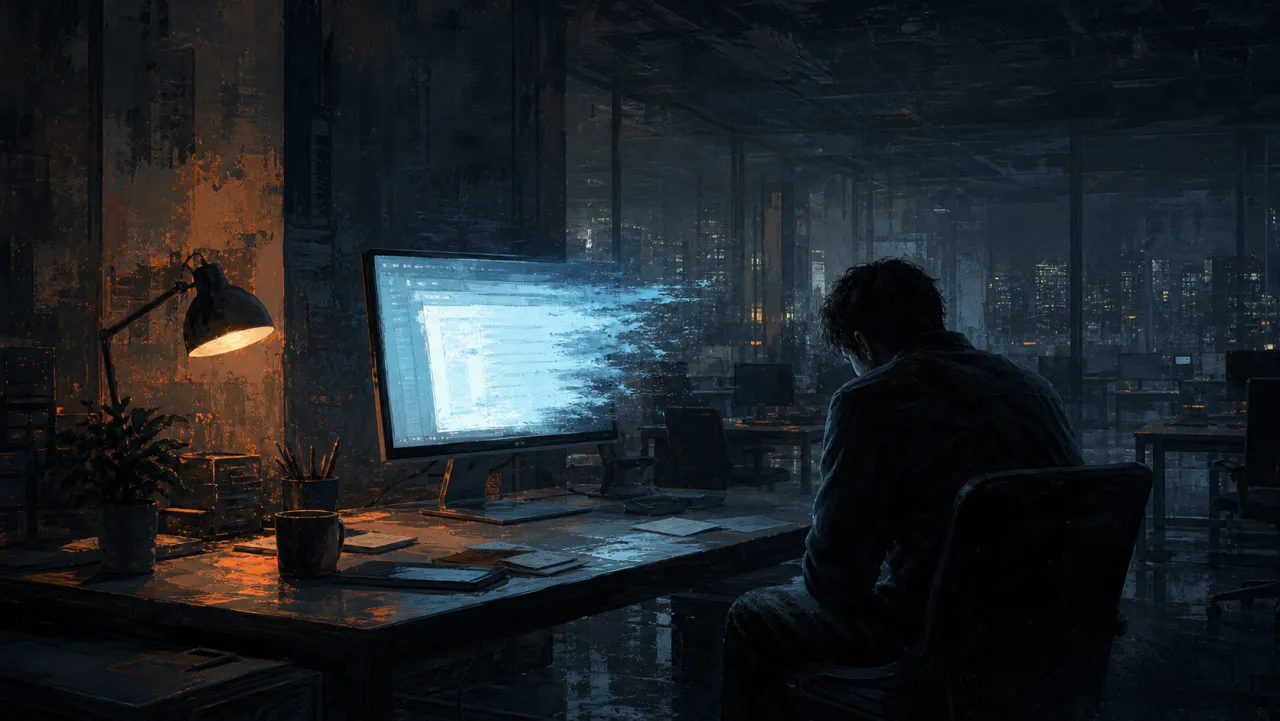
Tung looks at it. And for the first time in his career, he feels a faint chill down his spine. Not because AI is better than him.
But because AI doesn't need to arrive fifteen minutes early. Doesn't need to CC anyone. Doesn't need to sit through a ninety-minute meeting. Doesn't need to say something meaningless to stay safe.
AI just gets the work done. Bare. No performance.
And if the real work amounts to only that much — then those eight hours a day, all those years, what exactly was Tung doing?
That question, Tung decides not to answer.
He closes his laptop. Stands up. Heads to the water cooler. Runs into his colleague.
"You catch the match last night?"