
Engineering Leadership
Anh Lam and the Startup That Called Itself 'Family'
A bright promise, a long night, and the bill that arrives later.
2026-06-218 min read
The day Lam quit his job at a big company to join a startup, everyone looked at him the way you'd look at a man who'd just abandoned the city to climb a mountain and become a hermit.
"You've got guts."
"You had it stable and you quit?"
"What if it fails?"
Lam laughed, loud.
At twenty-seven, people tend to call panic "adventure."
.
The new office sat inside an old building, renovated.
No partitions.
No fixed seats.
Nobody wore a collared shirt.
There was one enormous sign on the wall:
"We don't build a company. We build the future."
Startups always talk as if they're about to invent electricity.
When, more often than not, the place is really just building a food-delivery app in a different color.
.
Lam loved this environment.
Everyone called each other by first name.
Everyone was full of energy.
At 2 a.m. they were still texting about the product as if they were saving the world.
Nobody counted their hours.
Because everyone worked every hour.
.
The CEO was only thirty, wore a black T-shirt, talked very fast, and always had the eyes of a man who'd just downed three cups of coffee and one funding round.
"We're not colleagues," he said on the first day.
"We're family."
This is a very dangerous sentence.
.
The first two years were fun.
Genuinely fun.
The whole team eating instant noodles at midnight.
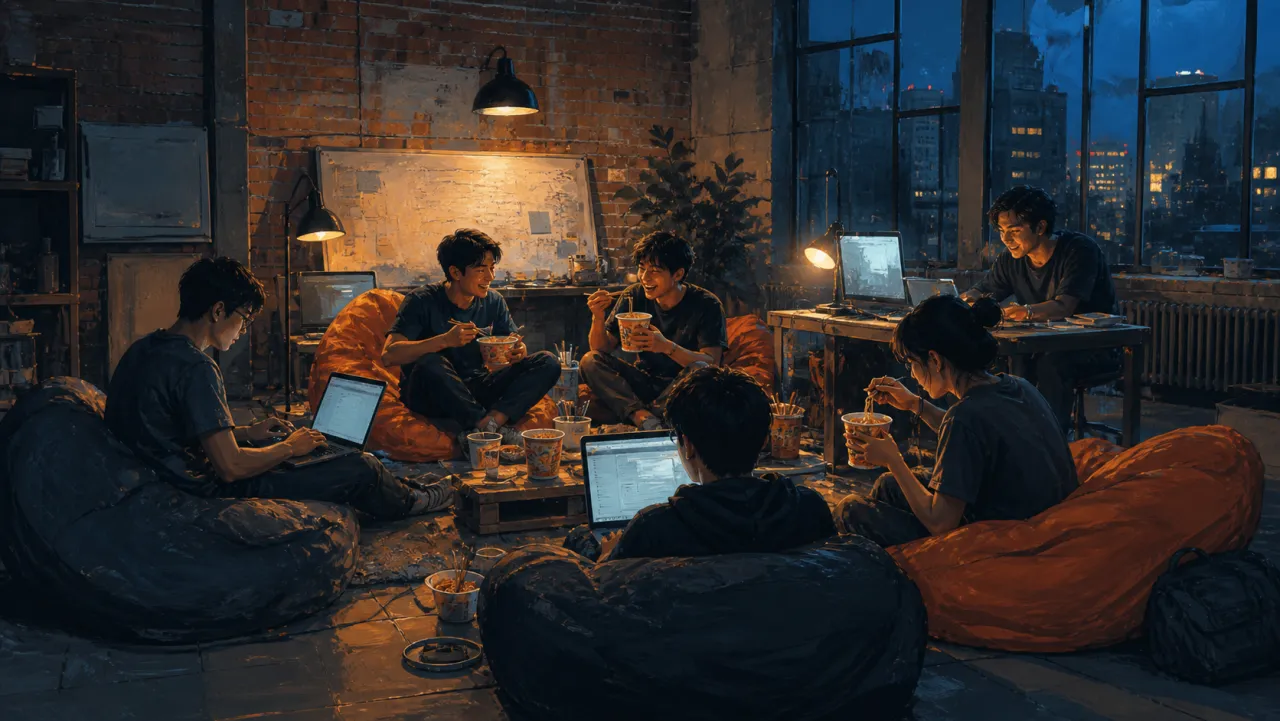
Sleeping on beanbags.
High-fiving when the system survived the load.
Everyone was broke, but they felt alive.
Nobody noticed the air conditioning was broken, because everyone believed the future was on its way.
.
Then time started to run.
Someone on the team got married.
Someone had a kid.
Someone had to care for a sick mother.
The very ordinary stuff of life began appearing in a world that had once run on instant noodles and adrenaline.
.
One Saturday night, the whole company was still in a meeting.
The CEO said:
"You're only young once. If you don't go all-in now, when?"
Everyone went quiet.
Back then, the line sounded inspiring.
At thirty-five, it started to sound like a financial threat.
.
A startup holds one very beautiful belief:
that instability is the price of freedom.
That's true.
Right up until your kid starts paying tuition in real money.
.
Lam slowly noticed his body changing.
He couldn't pull all-nighters anymore.
Too much coffee made his heart race.
Weekends weren't enough to recover.
But the company culture stayed the same.
Still worshipping: fire, risk, grind, fight.
Startups love the word "fight."
It sounds like a great historic battle, even though most of the time it's fixing system errors at 1 a.m.
.
One day the company hired someone new, twenty-two years old.
His eyes were blazing.
"I love high-speed environments. I don't want to live an ordinary life."
Lam looked at him for a long time.
He remembered saying the exact same thing a few years ago.
Youth has a superpower: it turns burnout into personal identity.
.
That month, payroll was late again.
The CEO called an all-hands.
"I know everyone's sacrificing a lot. But we're doing something big."
Everyone nodded.
People endure a great deal better when they're told their pain has meaning.
.
That night Lam came home late.
His daughter was already asleep.
His wife had left dinner in the microwave with a note:
"Reheat for 2 minutes."
He sat eating alone in the dark kitchen.

His phone lit up with a message in the company group chat:
"Anyone online to help with an emergency?"
Lam stared at the screen for a long time.
For the first time in years, he felt no adrenaline.
He just felt tired.
.
The next morning, one of the young ones posted online:
"A startup is brutal but worth it. Every single day I feel like I'm living to the fullest."
The post got a lot of hearts.
Lam left one too.
Then he opened his banking app to check his balance.
.
He suddenly realized something a little sad:
a lot of startups are, in truth, built on the energy of people still too young to understand that their bodies and their lives have limits.
.
That afternoon, the CEO said it again in a meeting:
"Our company needs to keep the spirit of those early days."
Lam looked around.
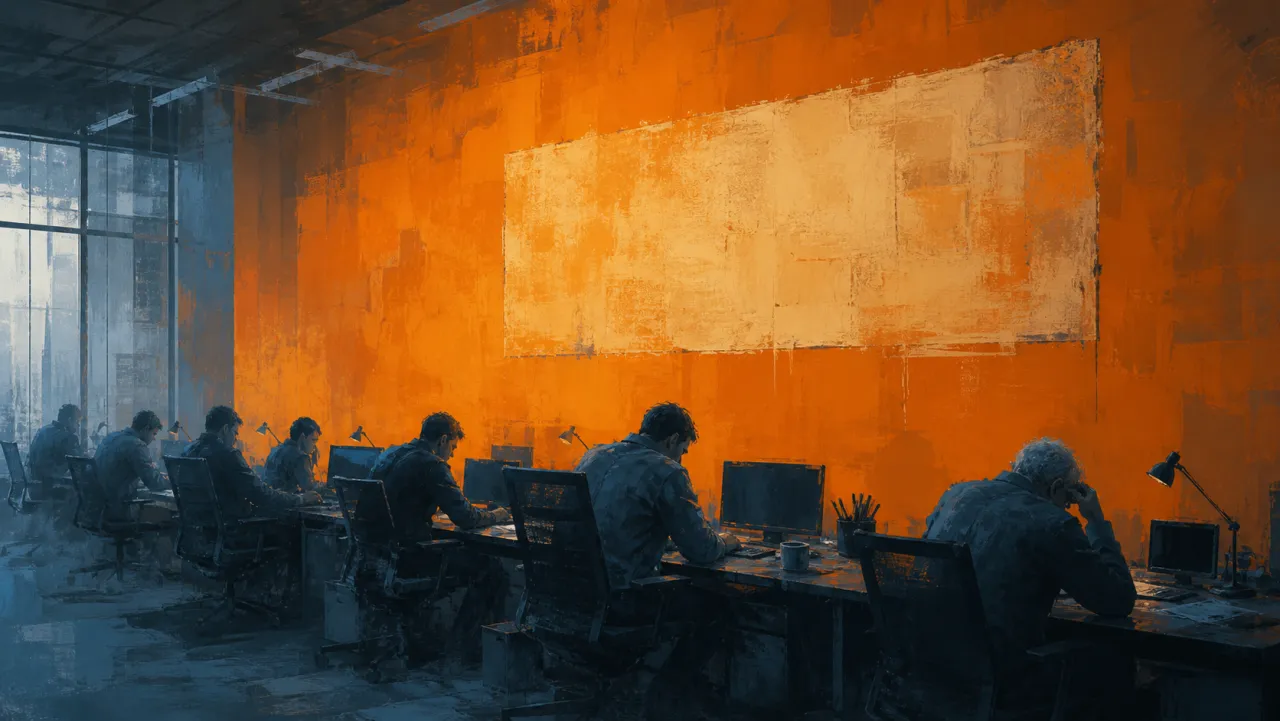
No one looked like the early days anymore.
One had back pain.
One had gotten divorced.
One had started taking sleeping pills.
Only the slogan never aged.
.
After work, Lam stood for a long time outside the office door.
Inside, the lights were still on.
The young ones were still laughing loud, still talking about "changing the world."
He found himself missing who they used to be.
And then he felt for them.
Because there's an age at which a person thinks instability is the sign they're living large.
Right up until life starts mailing the bills, every single month.